
Greenhouse
A sheltered nursery where seeds and cuttings become strong young plants for the Seed to Sea garden and community sharing.
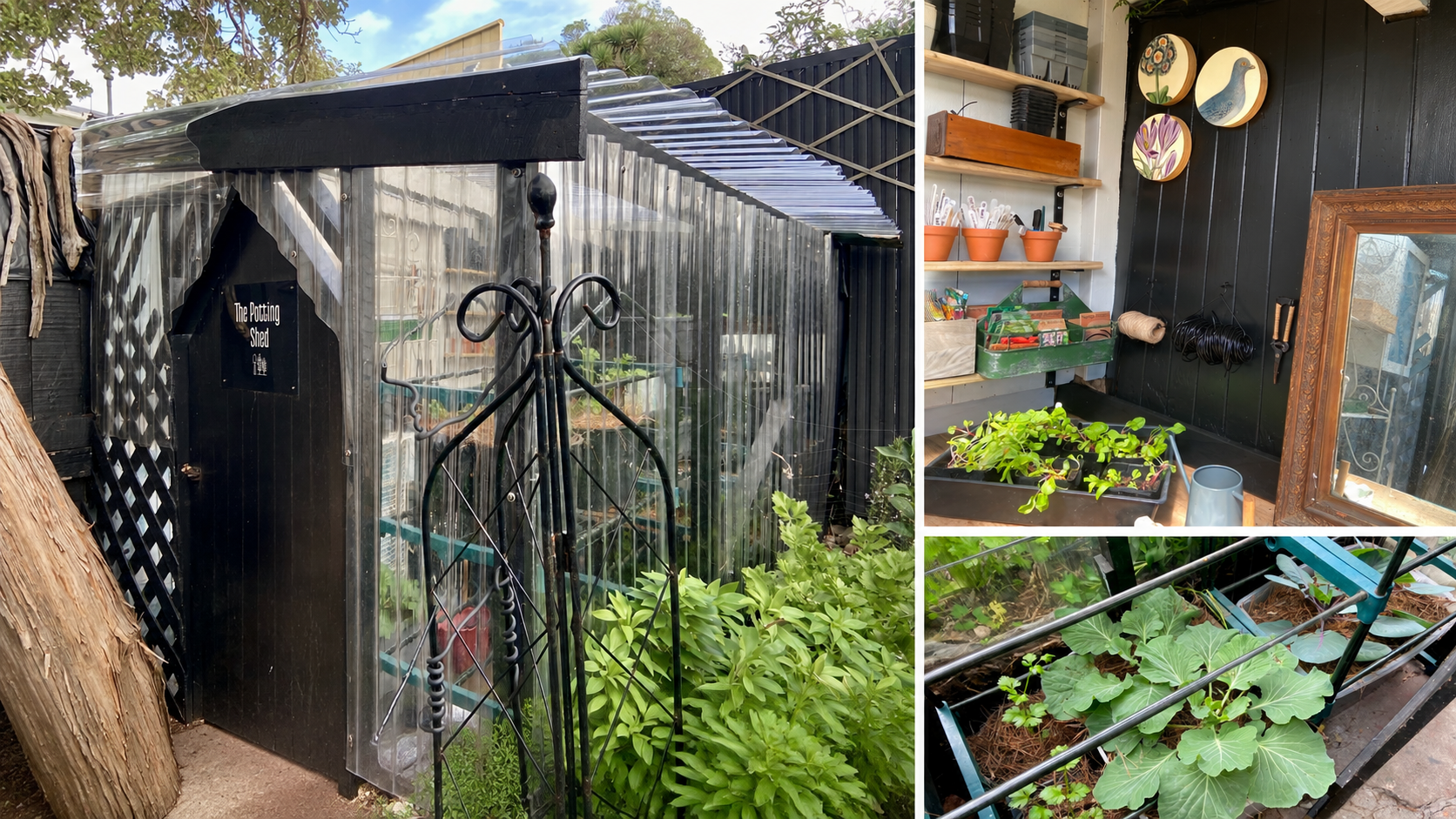
Where the growing season begins
The greenhouse and adjoining potting shed at 38 The Parade provide a protected place for raising seeds, propagating plants and caring for young seedlings.
In Island Bay’s windy coastal conditions, the greenhouse creates a warmer and calmer microclimate. Its translucent cladding captures sunlight while sheltering young plants from strong winds, heavy rain and cooler temperatures.
This allows some crops to be started earlier and gives tender plants time to establish before they are moved into productive beds and other parts of the garden. Shelves and benches make efficient use of the small structure, providing space for seed trays, cuttings, potting on and everyday plant care.
Some of the plants raised here remain at Seed to Sea, while others can be shared with neighbours and the wider community.
How the system connects
Seeds and cuttings enter the greenhouse for propagation.
Sunlight warms the structure and creates a protected microclimate.
The potting shed and benches support sowing, potting on and plant care.
Established seedlings move into productive beds and other garden spaces.
Plants and seedlings can also be shared with the community.
A closer look: working with the seasons
The greenhouse is busiest from late winter through spring, when seeds are being sown and young plants prepared for the main growing season.
Starting plants under cover gives them time to develop before they face the garden’s cooler temperatures and coastal winds. It also provides greater flexibility around sowing and planting dates when Wellington’s weather is unsettled.
Throughout the rest of the year, the greenhouse remains useful for propagation, potting on and caring for plants that need additional shelter.
At a glance
Location: Greenhouse and potting shed at 38 The Parade, Island Bay
Structure: Timber frame with translucent corrugated cladding
System type: Protected propagation and young-plant growing space
Main inputs: Seeds, cuttings, potting mix, containers, water, sunlight and daily care
Main outputs: Seedlings and propagated plants
Busiest period: Late winter through spring
Garden use: Supplying young plants for productive beds and community sharing
Role in the garden: Propagation, seasonal resilience and efficient use of a small growing space
Permaculture principles: Catch and Store Energy; Use Small and Slow Solutions; Use and Value Diversity
The greenhouse shows how a small structure can create more flexibility in an urban garden—helping Seed to Sea grow with the seasons and share more plants beyond the property.
