
Hen Village
Nine hens provide eggs, manure and daily activity while helping cycle nutrients through the wider Seed to Sea garden.
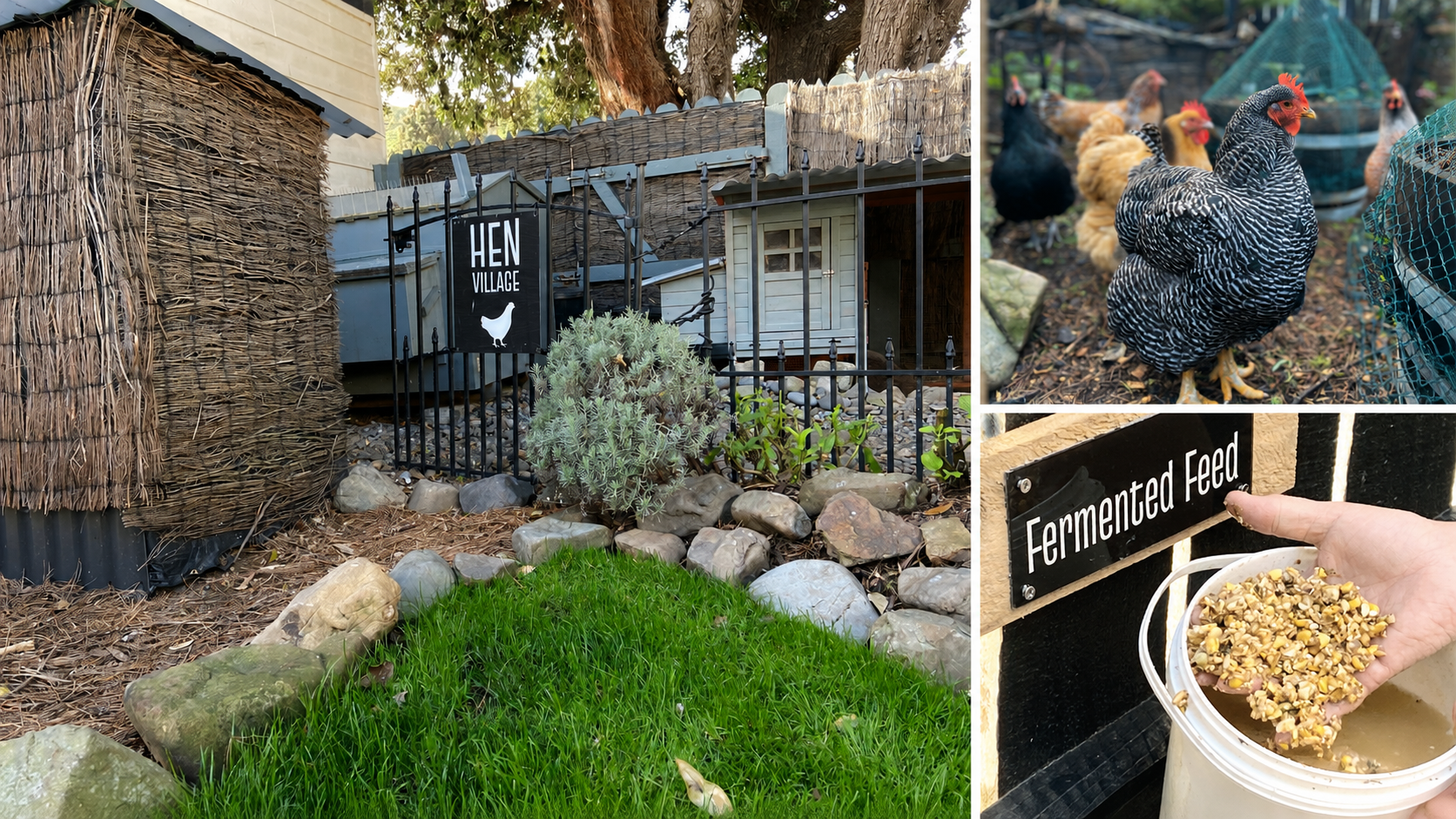
A small flock with a big role
Hen Village is home to nine hens that form an important part of the productive living system at 38 The Parade.
The hens provide fresh eggs, but their role extends well beyond food production. Suitable kitchen scraps, garden greens, grain, rainwater and bedding become useful inputs. In return, the hens produce manure and used bedding that can be composted and returned to the soil.
This creates a practical connection between animal care, food production, composting and healthy soil. What one part of the system produces becomes a resource for another.
How the system connects
Collected rainwater supports daily hen care and feed preparation.
Fermented grain, suitable kitchen scraps and garden greens help feed the flock.
The hens provide eggs, manure, feathers and used bedding.
Manure and bedding become valuable ingredients for compost.
Finished compost returns nutrients to productive beds and supports future harvests.
A closer look: fermented feed
Grain is fermented using collected rainwater and managed through a simple four-bucket rotation. This provides a regular supply of moist feed and makes it more difficult for the hens to scatter and waste the grain.
Fermented feed is one part of the flock’s wider care, alongside clean drinking water, suitable greens, varied food, shelter and space for natural hen behaviour.
At a glance
Location: Hen Village, 38 The Parade, Island Bay
Flock: Nine hens
System type: Integrated backyard poultry and nutrient-cycling system
Main inputs: Grain, collected rainwater, suitable scraps and greens, and bedding
Main outputs: Eggs, manure, used bedding and compost ingredients
Role in the garden: Food production, nutrient cycling and connecting animals with living soil
Permaculture principles: Produce No Waste; Catch and Store Energy; Integrate Rather Than Segregate
Hen Village shows how a small backyard flock can perform several useful functions within an ordinary urban garden—and how thoughtful connections can turn everyday resources into food and fertility.
