
Parsley
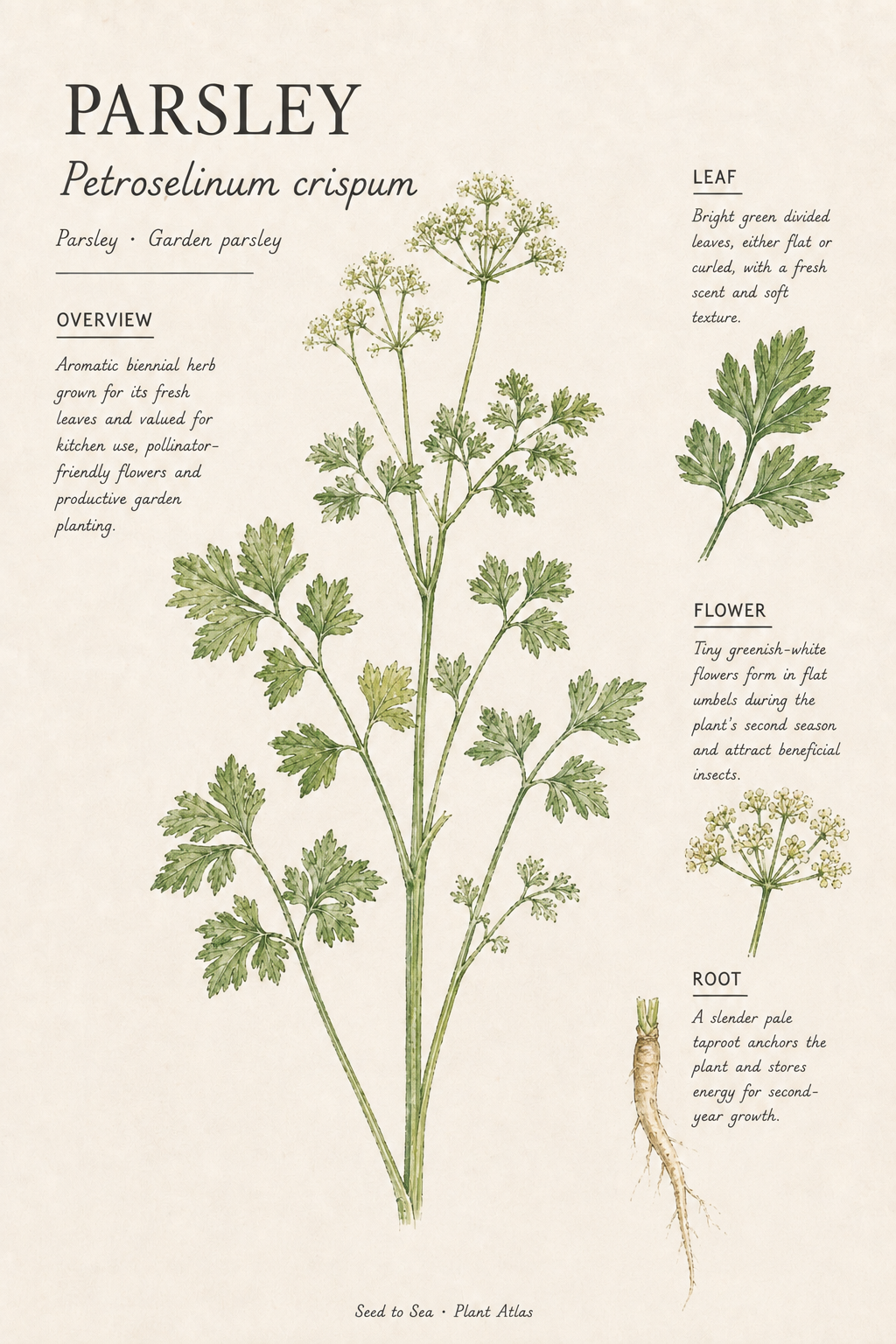
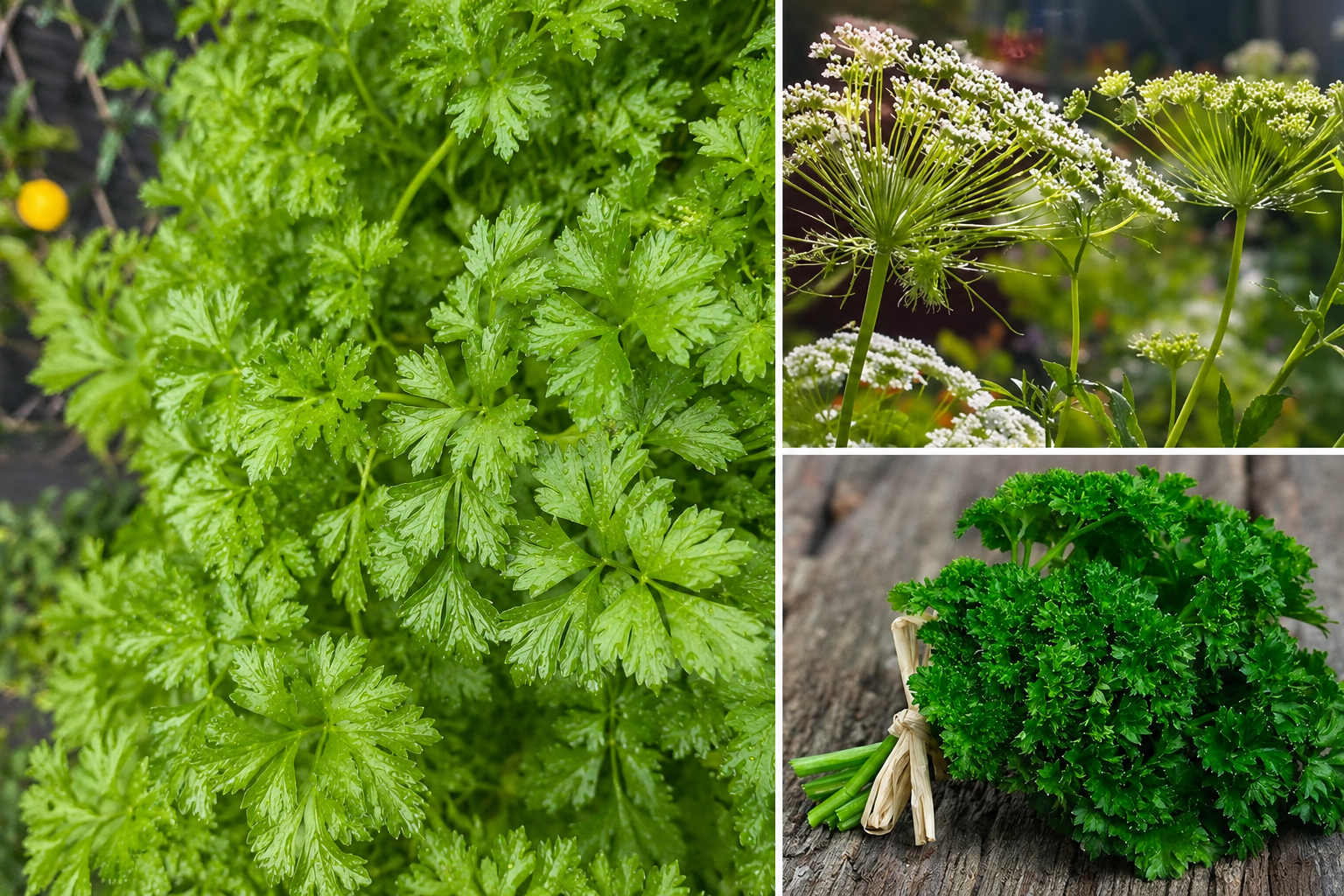
A familiar herb picked regularly for the kitchen, with a second life as a flowering plant for beneficial insects
More than a kitchen herb
Parsley is easy to overlook because it is so familiar, but it is one of the plants we use most often. A few leaves can be picked when they are needed, both from the productive beds and from plants growing out on the Berm Veggie Patch.
We do not harvest every plant to the end. Some are left to rise up and flower in their second season, when their small blooms become busy with hoverflies, bees and other insects. Letting parsley complete its life cycle reveals a side of the plant that never reaches the supermarket shelf.
Its role in the garden
Provides a regular supply of fresh leaves for the kitchen.
Adds edible planting to the community-facing berm.
Flowers for hoverflies, bees and other beneficial insects.
Demonstrates the value of letting some food plants complete their life cycle.
Can produce seed for future sowing when plants are left to mature.
At a glance
Location: Productive beds and Berm Veggie Patch
Plant type: Biennial culinary herb
Harvest: Through much of the year in mild conditions
Botanical name:Petroselinum crispum
Family: Apiaceae
Pollination: Bees, hoverflies and other insects
Variety: Add flat-leaf, curly or cultivar name if known
Parsley shows how even the most ordinary kitchen herb can become habitat when it is given enough time in the garden.
