
Comfrey
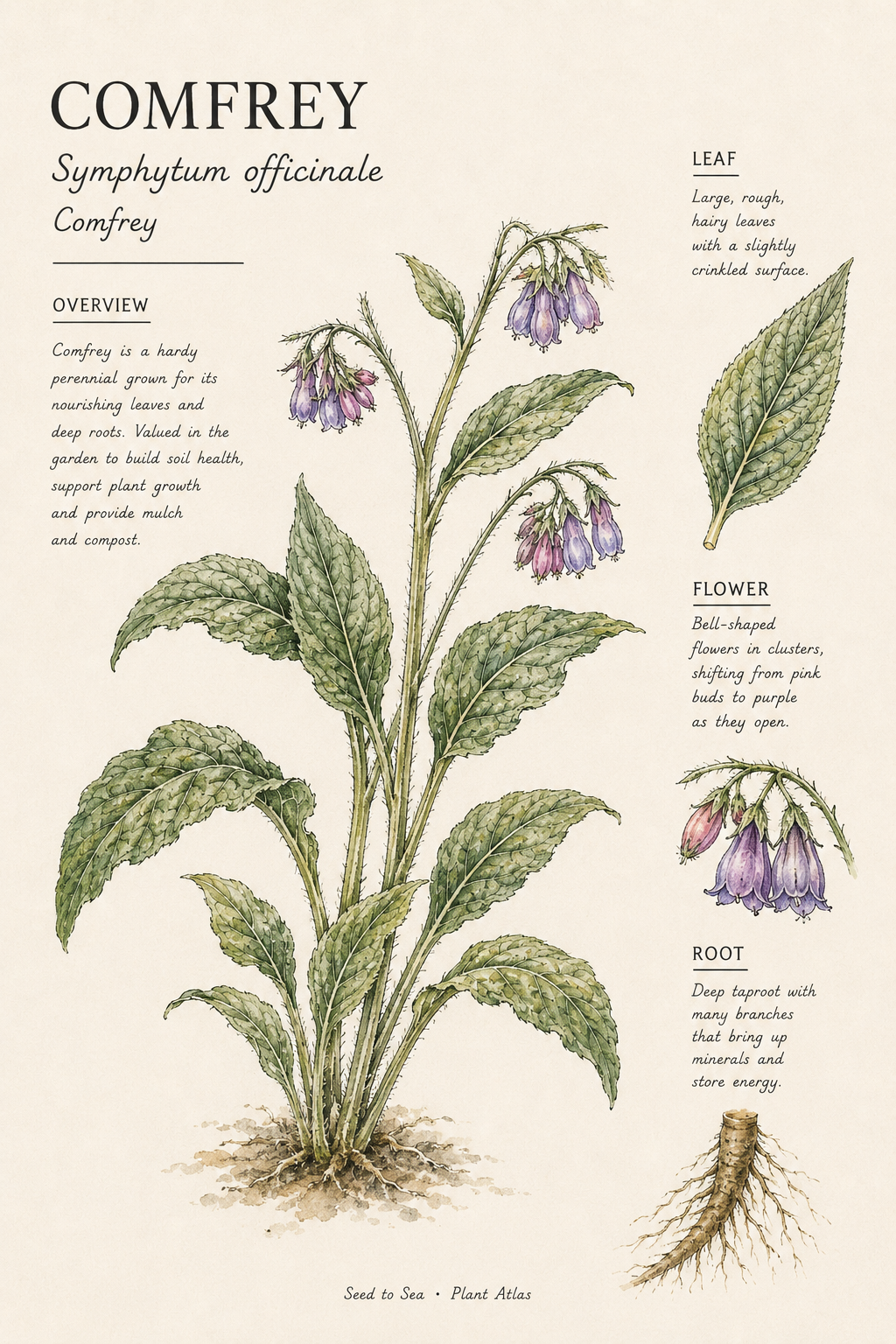
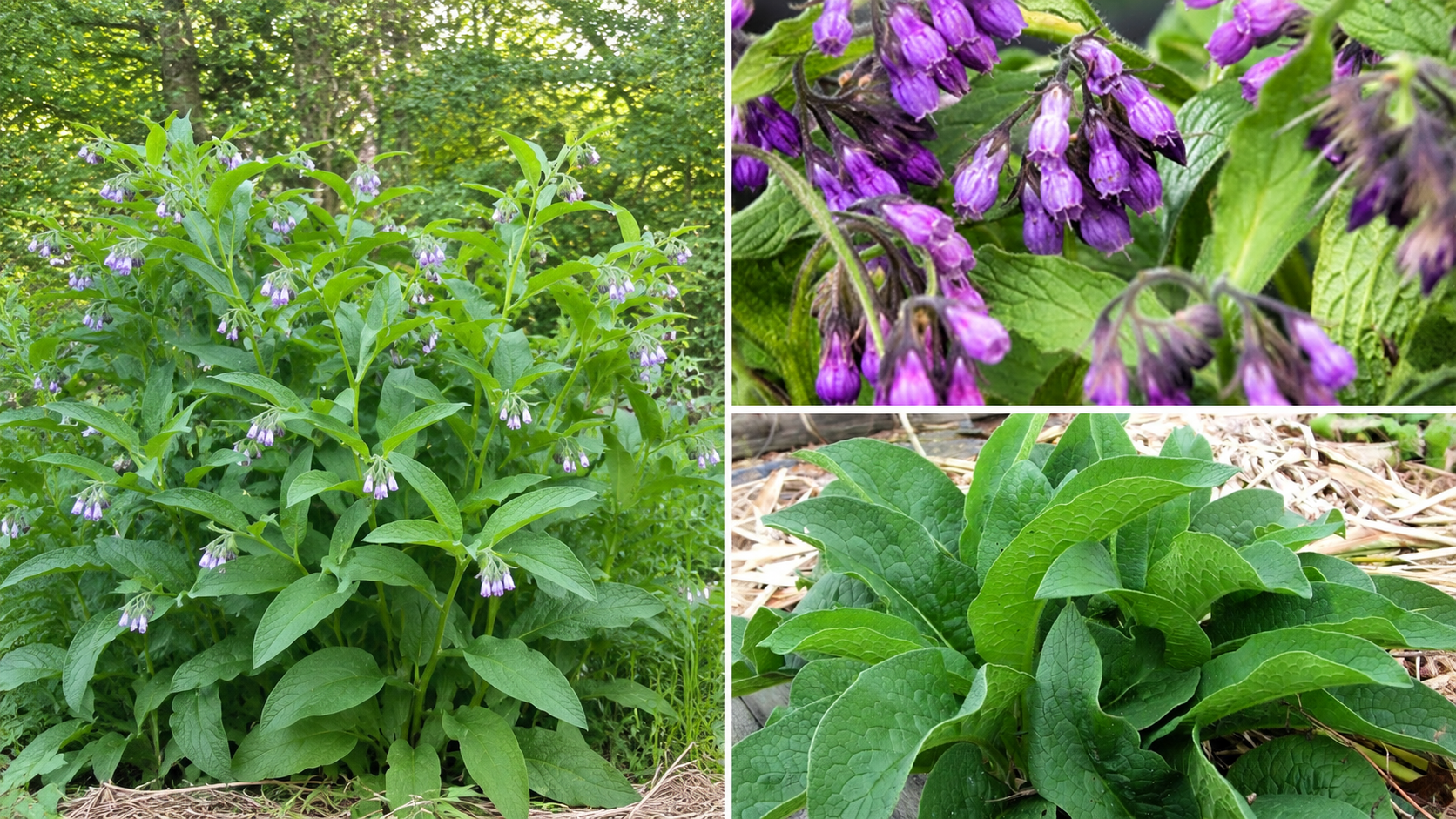
A vigorous support plant that is repeatedly cut and returned to the garden as mulch and compost material.
A plant grown to feed the garden
Comfrey is not grown for our table. We grow it for the garden itself. Its large leaves can be cut several times during the growing season, carried only a short distance and laid around established plants or added to the compost.
When it flowers, the plant becomes busy with bees. It is given a deliberate, permanent position because comfrey is far easier to plant than to remove—small pieces of root can grow again after the soil is disturbed.
Its role in the garden
Produces leafy biomass for compost and surface mulch.
Helps keep soil covered around its established position.
Provides flowers for bees and other insects.
Returns garden-grown organic matter to productive beds.
Connects perennial planting with the compost and soil systems.
At a glance
Location: Soil-building and compost-support areas
Plant type: Deep-rooted herbaceous perennial
Useful season: Spring to autumn
Botanical name: Confirm the species or cultivar growing on site
Family: Boraginaceae
Pollination: Bees and other insects
Management: Choose its position carefully; roots can resprout after disturbance
Comfrey is a quiet reminder that some of the garden’s most useful harvests are grown for the soil rather than for us.
The leaves are regularly cut and used around the garden as chop-and-drop mulch, added to compost and made into liquid plant feed. Its bell-shaped flowers also provide a valuable food source for bees and other pollinating insects.
Its role in the garden
Draws nutrients from deeper soil layers
Provides leaves for chop-and-drop mulch
Adds nutrient-rich material to the composting system
Can be used to make homemade liquid plant feed
Helps cover and protect the soil
Produces flowers that attract bees and other pollinators
Demonstrates how one plant can perform several functions within a permaculture system
Garden details
Location: Garden beds and soil-building areas
Useful growth period: Spring–autumn
Flowering period: Spring–summer
Plant family: Boraginaceae
Botanical name:Symphytum officinale
Growth habit: Deep-rooted herbaceous perennial
Pollination: Bees and other insects
